PC 용 Where is Walter?
- 카테고리: Entertainment
- 최근 업데이트: 2019-05-28
- 현재 버전: 1.2.2
- 파일 크기: 73.63 MB
- 개발자: OPHRYS Systèmes
- 호환성: 필요 Windows XP, Windows Vista, Windows 7, Windows 8, Windows 8.1 and Windows 10, Windows 11




PC에서 Where is Walter? 용 호환 APK 다운로드
| 다운로드 | 개발자 | 평점 | 점수 | 현재 버전 | 성인 랭킹 |
|---|---|---|---|---|---|
| ↓ PC용 APK 다운로드 | OPHRYS Systèmes | 0 | 0 | 1.2.2 | 4+ |
에뮬레이터의 중요성은 컴퓨터에서 안드로이드 환경을 흉내 내고 안드로이드 폰을 구입하지 않고도 안드로이드 앱을 설치하고 실행하는 것을 매우 쉽게 만들어주는 것입니다. 누가 당신이 두 세계를 즐길 수 없다고 말합니까? 우선 아래에있는 에뮬레이터 앱을 다운로드 할 수 있습니다.
A. Nox App . OR
B. Bluestacks App .
Bluestacks는 매우 대중적이므로 개인적으로 "B"옵션을 사용하는 것이 좋습니다. 문제가 발생하면 Google 또는 Naver.com에서 좋은 해결책을 찾을 수 있습니다.
Bluestacks.exe 또는 Nox.exe를 성공적으로 다운로드 한 경우 컴퓨터의 다운로드 폴더 또는 다운로드 한 파일을 일반적으로 저장하는 곳으로 이동하십시오.
찾으면 클릭하여 응용 프로그램을 설치하십시오. PC에서 설치 프로세스를 시작해야합니다.
다음을 클릭하여 EULA 라이센스 계약에 동의하십시오.
응용 프로그램을 설치하려면 화면 지시문을 따르십시오.
위 사항을 올바르게 수행하면 소프트웨어가 성공적으로 설치됩니다.
이제 설치 한 에뮬레이터 애플리케이션을 열고 검색 창을 찾으십시오. 지금 입력하십시오. - Where is Walter? 앱을 쉽게 볼 수 있습니다. 그것을 클릭하십시오. 응용 프로그램 창이 열리고 에뮬레이터 소프트웨어에 응용 프로그램이 표시됩니다. 설치 버튼을 누르면 응용 프로그램이 다운로드되기 시작합니다. 이제 우리는 모두 끝났습니다.
그런 다음 "모든 앱"아이콘이 표시됩니다.
클릭하면 설치된 모든 응용 프로그램이 포함 된 페이지로 이동합니다.
당신은 Where is Walter? 상. 그것을 클릭하고 응용 프로그램 사용을 시작하십시오.
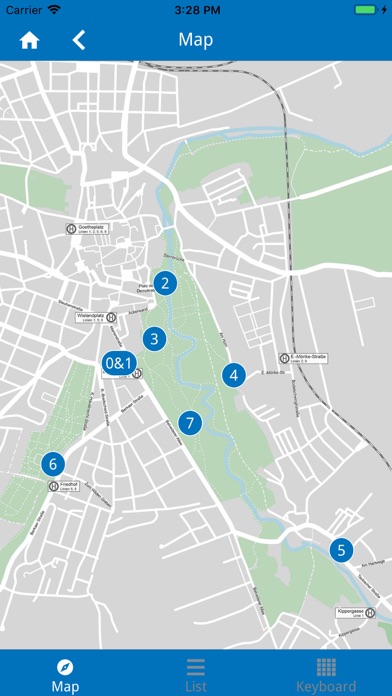
In 2019, the 100th anniversary of the founding of the Bauhaus in Weimar will be celebrated. Together, the Chair of Experimental Radio and the Chair of Monument Preservation and Building History at the Bauhaus-Universität Weimar used this occasion to examine the inheritance and the traces left by the Weimar Bauhaus in an artistic way. For this interdisciplinary project, students of Media Art and Urbanism compiled an Audio Walk to familiarise visitors of the historical founding location with the history and stories surrounding the Weimar Bauhaus and its founder Walter Gropius. The audio walking tour, “Where is Walter?” is divided up into seven tracks and embarks on a search for traces of the first Bauhäusler and their works. The different tracks can be heard in any order, independently of one another. In just less than an hour, Track 1 leads you to the most important Bauhaus sites on the university campus. In addition, there are 5 shorter tracks at other positions throughout town, where Gropius and Co. left evidence of their work. All the positions can be reached on foot or with public transportation. A walk through the Park on the river Ilm leads to the Reithaus (Track 2), where László Moholy-Nagy taught the preliminary course, to the Tempelherrenhaus (Track 3), which Johannes Itten used as his atelier. The House Am Horn (Track 4) that was built as a model home for the Bauhaus Exhibition in 1923, is also accessible by walking across the park, as is the restaurant “Ilmschlösschen” (Track 5), in which parties already took place during the Bauhaus years. Track 6, on the other hand, is concerned with the Bolt Monument at the Weimar Central Cemetery, which is the only built object designed by Walter Gropius in Weimar. A bonus track (Track 7) reveals “Walter’s Vision”. The Audio Walk is not meant to be purely informational, but rather – by connecting the contents with stories and sounds – transforms the visit into a sensual experience. The students composed each track individually by artistically interweaving original recorded quotes, interviews, sound elements and radio play effects. This provides exciting changes between the seven Bauhaus sound tracks that are not only entertaining but also especially interesting because of the lesser-known aspects about the history of the Weimar Bauhaus and its pertinence to today’s University that are communicated. We were able to “borrow” the voices from professional actresses and actors, primarily from the German National Theatre. The soundtrack was performed by the BauhausFM Radio Orchestra, which is also a student project at the Bauhaus University.